Summary
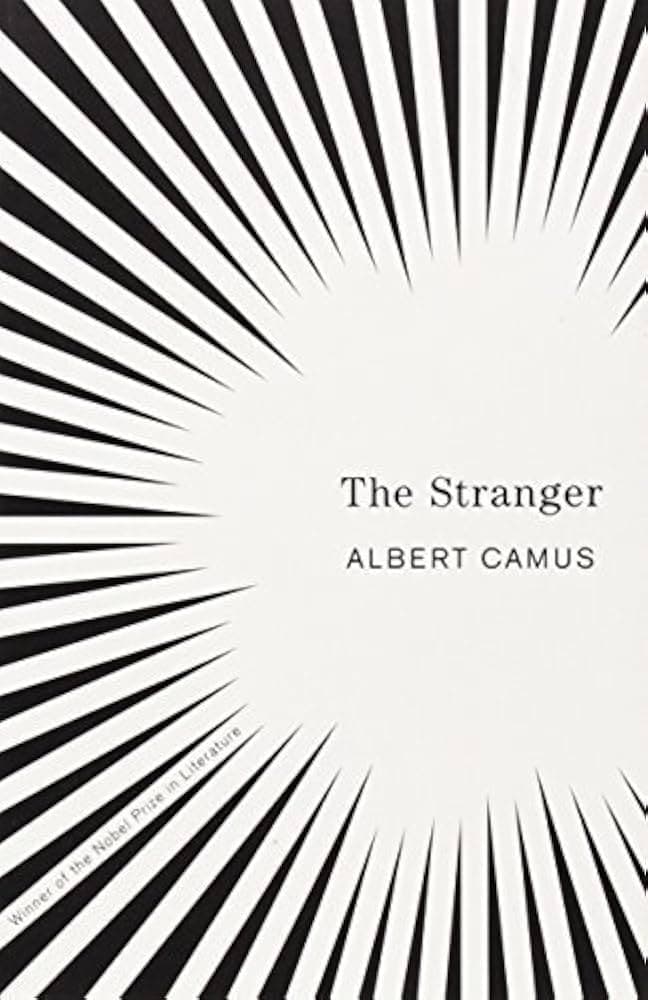
The Stranger follows Meursault, a detached and emotionally indifferent French Algerian. After his mother's death, which he seems to react to with no sadness, Meursault kills an unnamed Arab man on a sun-drenched beach. His case is clearly self-defense … or is it? The subsequent trial focuses heavily on the mysteries of his character, ultimately leading to a condemnation. For Camus, however, The Stranger is not a condemnation of the man, but of society’s unwelcoming rigidity.
There are few books as immediately intriguing as The Stranger. What other authors accomplish with 80 pages is masterfully accomplished by Camus in 10, dragging the reader into a realm of mystery and curiosity, refusing to let go. When Meursault engages in a new relationship two days after his mother’s funeral, some dismiss it as a form of coping. Then the “murder” happens. Five bullets embedded in a man’s flesh are hard to dismiss. This leaves the reader questioning: is Meursault truly coping, or is there something more sinister at play?
I love The Stranger for its twisted honesty, its unafraidness to criticize society. A mix of mystery, identity, and justice, Camus’ work embodies much that I love about literature.
While other novels condemn characters because of their protesting expression, Camus explores the lack thereof: Meursault appears almost devoid of traditional emotion. What follows I will not spoil!
Should you read The Stranger? To start, I owe The Stranger much of my literary interest. This absurdist novel, coming in at 144 pages, is an easy read even for those who have not read much. Such fascinating, twisted ideas are written into minimalist, digestible sentences. This does not make it any less gripping, with a strong narrative arc full with. That being said, the exposition is deeply personal—there is no confrontation except for that which happens in Meursalt’s small town. I would highly recommend The Stranger to anyone interested in kicking off a literary journey.